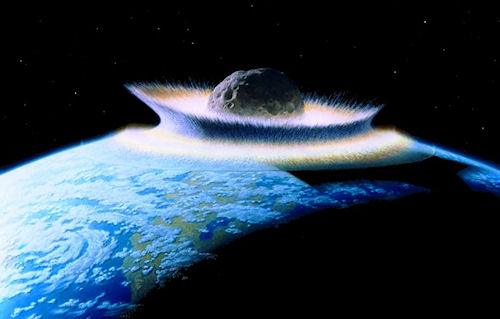
Imagine waking up one day to the news that a massive asteroid is hurtling towards Earth. Sounds like a plot from a Hollywood blockbuster, right? But what if we told you that NASA has been tracking potential asteroid threats for years? In this article, we dive deep into the world of asteroids, NASA’s predictions, and what it means for our planet. Buckle up, because this is going to be a wild ride!
What Are Asteroids and Why Should We Care?
Asteroids are rocky remnants from the early formation of our solar system, primarily found in the asteroid belt between Mars and Jupiter. While most asteroids are harmless, some are classified as Near-Earth Objects (NEOs) and pose a potential threat to our planet. With the increasing number of asteroids being discovered, the question arises: how many of these could actually hit Earth?
The Science Behind Asteroid Tracking
NASA has established several programs dedicated to tracking asteroids. The Near-Earth Object Observations (NEOO) program is at the forefront of this effort, utilizing powerful telescopes and advanced technology to monitor the skies. But how effective is this program? Can it really predict an asteroid impact?
NASA’s Asteroid Detection Technology
NASA employs a variety of methods to detect and track asteroids. From ground-based telescopes to space missions like the NEOWISE spacecraft, the agency is constantly on the lookout for potential threats. But despite these advancements, the vastness of space means that some asteroids can go undetected until it’s too late.
Recent Asteroid Close Calls: What You Need to Know
In recent years, there have been several close calls with asteroids that have sparked public interest and concern. For instance, in 2020, an asteroid the size of a car passed within 1,830 miles of Earth. While this particular asteroid posed no threat, it serves as a reminder of the potential dangers lurking in our solar system.
The 2021 Asteroid Incident: A Wake-Up Call
In 2021, an asteroid named 2021 PH27 was discovered, and its orbit brought it closer to the Sun than any other known asteroid. This discovery raised eyebrows among scientists and the public alike. What if this asteroid had a different trajectory? Could it have posed a threat to Earth? These questions highlight the importance of continuous monitoring and research.
What Happens If an Asteroid Hits Earth?
The thought of an asteroid impact can be terrifying. Depending on the size and speed of the asteroid, the consequences could range from localized destruction to global catastrophe. But what exactly would happen if a significant asteroid were to collide with our planet?
The Impact: A Catastrophic Scenario
Imagine a scenario where a large asteroid strikes Earth. The immediate effects would include massive shockwaves, fires, and tsunamis. The long-term consequences could be even more devastating, leading to climate change, food shortages, and mass extinction. This is not just science fiction; it’s a real possibility that scientists are taking seriously.
NASA’s Preparedness Plans: Are We Ready?
In light of the potential threat posed by asteroids, NASA has developed several preparedness plans. These include impact simulations, public awareness campaigns, and international collaboration to develop strategies for asteroid deflection. But are these measures enough to protect us?
International Collaboration: A Global Effort
NASA is not alone in this fight. The agency collaborates with international space organizations to share data and develop joint strategies for asteroid detection and deflection. This global effort is crucial, as an asteroid impact is a threat that transcends borders.
Can We Deflect an Asteroid? The Science of Planetary Defense
One of the most exciting areas of research in planetary defense is the possibility of deflecting an asteroid. But how feasible is this? Scientists are exploring various methods, including kinetic impactors, gravity tractors, and nuclear devices. Each method has its pros and cons, and ongoing research is essential to determine the best approach.
The DART Mission: A Game Changer in Asteroid Defense
NASA’s Double Asteroid Redirection Test (DART) mission is a groundbreaking project aimed at testing the feasibility of asteroid deflection. By intentionally crashing a spacecraft into an asteroid, scientists hope to alter its trajectory and gather valuable data for future planetary defense strategies. This mission could be a game changer in our fight against potential asteroid threats.
Public Awareness: Why You Should Care
While the idea of an asteroid hitting Earth may seem far-fetched, public awareness is crucial. Understanding the risks and the science behind asteroid tracking can empower individuals to advocate for more funding and research in planetary defense. After all, knowledge is power!
Stay Informed: Follow NASA’s Updates
NASA regularly updates the public on asteroid discoveries and potential threats. By following their official channels, you can stay informed about the latest developments in asteroid research and planetary defense. Don’t wait until it’s too late—knowledge is your best defense!
Conclusion: The Asteroid Threat is Real
As we conclude our exploration of NASA’s asteroid tracking efforts and the potential threat of an asteroid hitting Earth, one thing is clear: the threat is real, and we must take it seriously. With ongoing research, international collaboration, and public awareness, we can work together to mitigate the risks posed by these celestial bodies. So, the next time you hear about an asteroid, remember: it could be closer than you think!
Stay Updated on Asteroid Threats!
Subscribe to our newsletter for the latest news on NASA’s asteroid tracking efforts and planetary defense strategies!